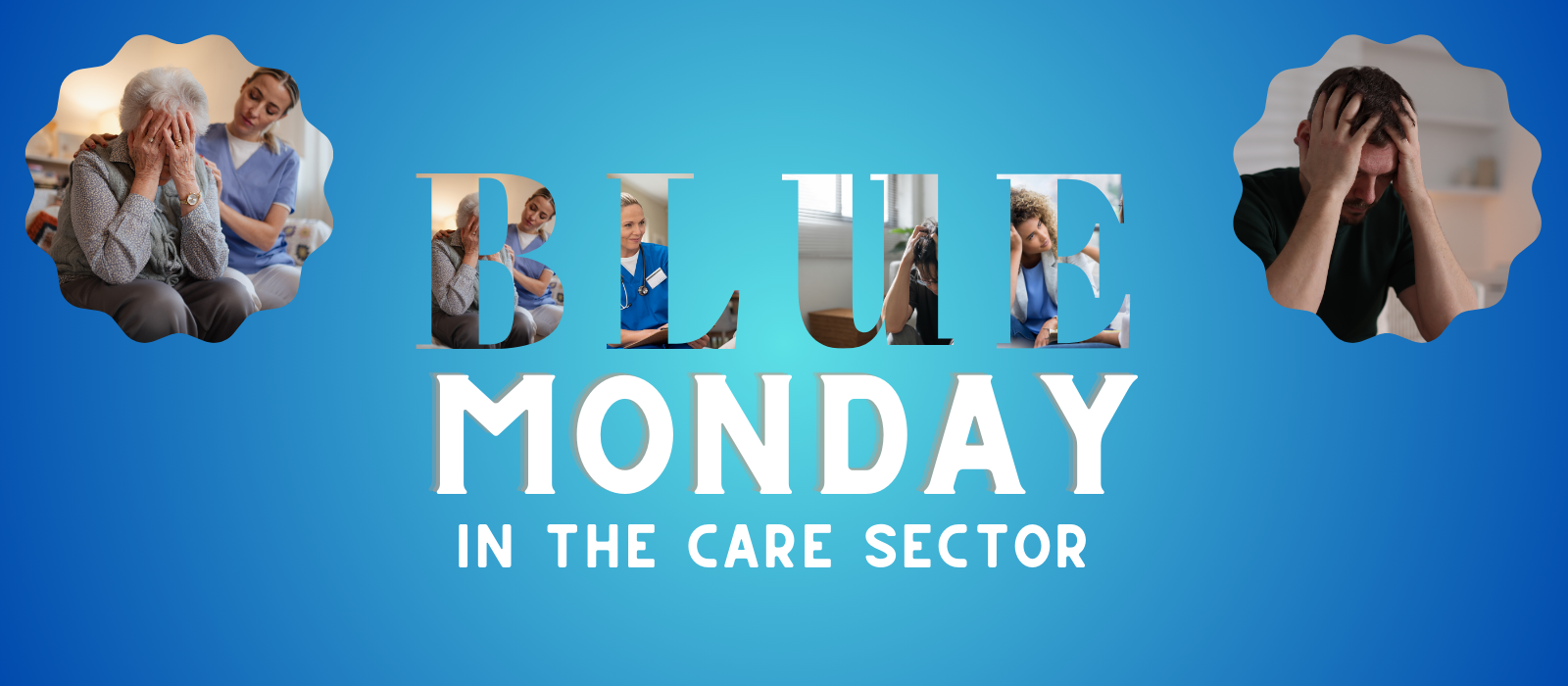
Blue Monday in the Care Sector: Looking After Those Who Care
- 19 Jan 2026
- News
Blue Monday in the Care Sector: Looking After Those Who Care
Blue Monday in the Care Sector: Looking After Those Who
Care
The third Monday in January is often referred to as Blue
Monday, said to be the most challenging day of the year for mood and
motivation. While the idea itself isn’t scientifically proven, the feelings
associated with this time of year are very real.
For care staff and residents alike, January can feel
particularly demanding.
Where Did Blue Monday Come From?
Blue Monday originated from a marketing campaign in the
early 2000s, based on a so-called formula that included factors such as
weather, debt, time since Christmas, and motivation levels. It is important to remember;
there is no scientific evidence to support the idea that one specific day is
more depressing than others.
However, that doesn’t mean the feelings people experience
around this time of year aren’t real.
Why Blue Monday Matters in Care Settings
The care sector operates year-round, often under pressure,
and winter brings additional challenges:
- Increased illness and hospital admissions
- Staff shortages and long shifts
- Reduced daylight and cold weather
- Emotional fatigue following the festive period
- Heightened loneliness for residents
Care staff are trained to put others first, but this can
mean their own emotional wellbeing is overlooked.
The Impact on Care Staff
Care workers often carry a heavy emotional load. Supporting
residents through illness, dementia, end-of-life care, and loneliness—while
managing personal responsibilities—can lead to:
- Burnout and exhaustion
- Low mood or motivation
- Increased stress or anxiety
Blue Monday can serve as a useful prompt to pause and
check in with staff wellbeing.
Simple actions can make a meaningful difference:
- Acknowledging the pressures staff face
- Encouraging breaks and hydration
- Offering wellbeing conversations or supervision
- Sharing mental health resources or employee support
services
- Creating a culture where it’s safe to say “I’m
struggling”
Feeling low does not mean someone is unsuited to care—it
often means they care deeply.
The Impact on Residents
For residents, winter can amplify feelings of:
- Loneliness or isolation
- Low mood due to limited daylight and reduced
activities
- Anxiety or confusion, particularly for those living
with dementia
Blue Monday can be an opportunity to focus on emotional
as well as physical care:
- Encouraging social interaction, even in small ways
- Providing meaningful activities
- Supporting routines that give structure and comfort
- Taking time for conversation and reassurance
Kindness, familiarity, and human connection are powerful
tools in care.
Turning Blue Monday into a Positive Moment
Rather than labelling a single day as “depressing,” care
providers can use Blue Monday as a wellbeing awareness moment:
- Promote mental health conversations
- Remind staff and residents that low mood is normal
and support is available
- Reinforce
a compassionate, supportive workplace culture
Wellbeing initiatives don’t need to be expensive or complex.
Sometimes, feeling seen and valued is enough.
Caring for Mental Health All Year Round
Mental wellbeing in care should not be limited to one day in
January. Ongoing support, good leadership, open communication, and realistic
expectations are essential.
When care staff feel supported, residents benefit too.
Final Thoughts
Blue Monday may be a concept—but compassion, understanding,
and emotional support are very real needs in the care sector. By recognising
the emotional impact of winter and the demands of caring, we can create
environments where both staff and residents feel valued, supported, and
understood.
Because caring for others starts with caring for
ourselves—and each other.
Further Reading
🔗 Explore
CareCalc: Smarter Dependency Tool for Care Homes - https://fusioncare.co.uk/blog/care-home-dependency-tool
🔗 Blue Monday
& Mental Health in Social Care (Nurseplus UK) - https://www.nurseplusuk.com/blog/2024/01/Blue-Monday-Mental-Health-Social-Care