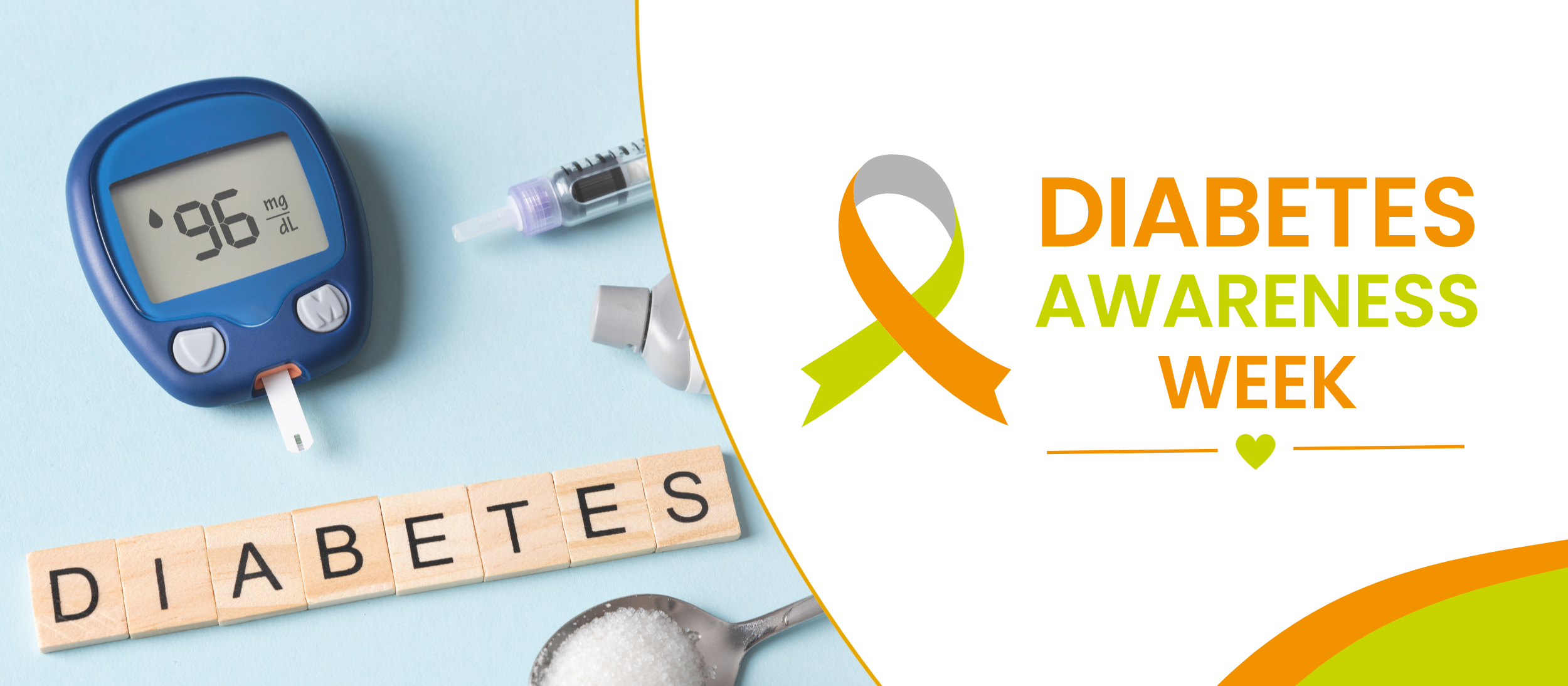
Diabetes Awareness Week (UK): Let’s Talk, Learn and Take Action
- 08 Jun 2026
- News
Every June, people across the UK
come together for Diabetes Week (often called Diabetes Awareness Week) to shine
a light on what it’s really like to live with diabetes, challenge
misconceptions, and encourage better support for everyone affected. Diabetes UK
has confirmed that Diabetes Week 2026 runs from 8–14 June, with a focus
on tackling diabetes stigma through its campaign theme: “Strike Out Stigma”.
The message is simple: nobody chooses diabetes—and blame or judgement helps no
one.
What is Diabetes Awareness Week?
Diabetes Awareness Week is a
UK-wide campaign that brings together people living with diabetes, their
families, healthcare professionals, schools, workplaces and communities. It’s a
chance to share real stories, promote understanding, and highlight practical
ways to reduce harm—whether that’s spotting symptoms earlier, getting the right
care, or changing the way we speak about diabetes, so people feel supported
rather than judged.
Diabetes in the UK: why awareness matters
Diabetes is one of the UK’s
biggest and fastest-growing health challenges. According to Diabetes UK
estimates, more than 5.8 million people in the UK are living with diabetes,
including almost 4.6 million diagnosed and nearly 1.3 million who may have type
2 diabetes but don’t yet know it.
·
Type 2 diabetes accounts for around 90% of
diagnoses; type 1 accounts for around 8%.
·
An estimated 6.3 million people are at increased
risk of developing type 2 diabetes (based on blood sugar levels).
·
Without the right support, diabetes can lead to
serious complications. Diabetes UK reports that every week diabetes is linked
to 184 amputations, and more than 980 strokes, 680 heart attacks and 3,230
cases of heart failure.
Know the signs: when to get checked
Awareness can lead to earlier
diagnosis and quicker access to care. If you’re worried about symptoms, it’s
always worth speaking to a healthcare professional. Common signs that can be
linked with diabetes include:
• Going to the
toilet more often than usual (especially at night)
• Feeling very
thirsty
• Feeling
unusually tired
• Unexplained
weight loss
• Blurred vision
• Slow-healing cuts or frequent infections
Note: These symptoms can
have many causes and don’t always mean diabetes. But if they’re persistent or
worsening, getting checked is a sensible step.
Strike out stigma: words matter
Diabetes Week 2026 is centred on
tackling stigma—those everyday comments, assumptions or judgements that can
make life harder for people living with diabetes. Diabetes UK highlights that 8
in 10 people with diabetes say they’ve experienced negative attitudes, such as
blame or shaming. Stigma can discourage people from seeking support, attending
appointments, or feeling confident to manage their condition openly.
• Avoid
blame-based comments like “Should you be eating that?”—food choices and blood
glucose management are complex.
• Don’t assume
the type. Type 1 and type 2 are different conditions with different causes and
treatments.
• Ask before
advising. A simple “How can I support you?” goes a long way.
• Make space for
diabetes management (checking glucose, taking medication, or injecting insulin)
without awkwardness.
• Challenge myths kindly when you hear them—accurate information reduces harm.
How to get involved in Diabetes Week:
You don’t need to be a medical
expert to make a difference. Here are a few simple ways to take part in
Diabetes Awareness Week:
• Start a
conversation: Ask friends, family or colleagues what they know about
diabetes—and share one new fact you’ve learned.
• Share campaign
messages: Post a myth-busting message, a personal story (your own or shared
with permission), or a supportive reminder about stigma.
• Support someone
living with diabetes: Check in, listen, and respect what support looks like for
them.
• Bring it to
your workplace or school: Invite a speaker, run a wellbeing session, or share a
short “Diabetes Week” notice in newsletters.
• Use ready-made
materials: Diabetes UK provides downloadable posters and social media tiles you
can print or share.
• Fundraise or
donate: Many local communities organise walks, challenges or collections to
support diabetes research and services.
If you have diabetes: don’t miss your health checks
Recent Diabetes Week campaigns
have also highlighted the value of regular diabetes health checks (often called
an annual review). These appointments help you and your care team keep track of
things like long-term blood glucose, heart and kidney health, as well as eye
and foot checks—so any problems can be spotted early. If you’re overdue for
reviews or struggling to get appointments, it’s okay to ask your GP practice or
diabetes team what checks you’re entitled to and how to book them.
Where to find support and reliable information:
If you want to learn more, look for trusted sources such as Diabetes UK and NHS guidance (see links below). Diabetes UK’s Diabetes Week hub includes campaign information and printable resources you can share, plus support information for people living with diabetes.
Final thought: awareness is action
Diabetes Awareness Week isn’t
only about facts and figures—it’s about people. Whether you’re learning the
basics, supporting a loved one, or living with diabetes yourself, small actions
can have a big impact. This week let’s replace judgement with understanding,
swap myths for facts, and help create a UK where diabetes does no harm.
For more information, please
click on the links below:
Diabetes UK:
NHS:
British Heart Foundation:
Managing diabetes in care
settings requires accurate documentation, personalised care plans, and
effective communication between care teams. Discover how Fusion's Care Planning
software helps providers deliver safe, person-centred care: